Authors: Emily Larsen
Summit Pacific Medical Center needed help tackling cardboard contamination in sterile hospital areas. A capstone team from Washington State University, consisting of five Mechanical Engineering students, stepped in to develop a streamlined process that could keep patients safe and help the hospital pass inspections.
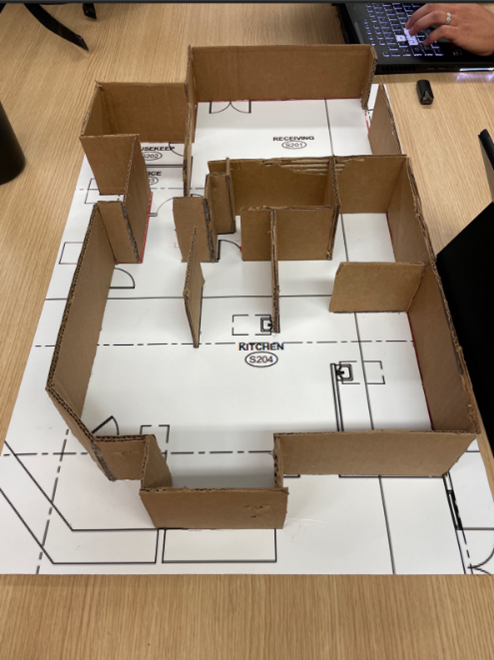
The team began by visiting the hospital in person to observe daily operations and interview staff. From those insights, they identified the root causes of clutter and contamination. Back on campus, they built scale models and a full-size mockup of the hospital’s receiving room to test layouts and workflows. By experimenting with shelving, tote placement, and routing logistics, they developed a refined system before recommending it to the hospital.
They reorganized the receiving room into a functional unpacking zone. From there, items were placed in color-coded totes, pushed along mapped delivery routes using carts, and stocked using a Plan for Every Part (PFEP)—a tool that tracks where items go, how much is on hand, and when to reorder.
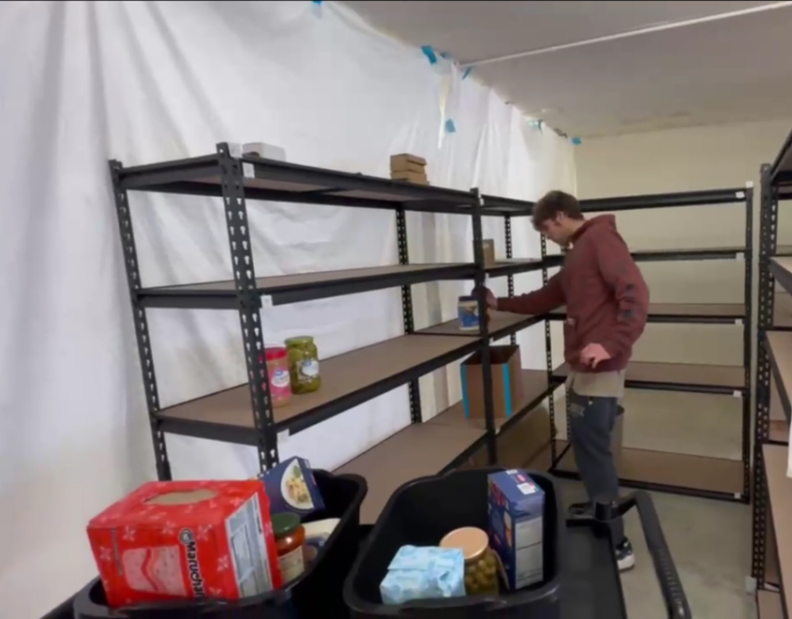
Rather than relying on spot fixes, this project implemented a system: clean spaces stayed clean, inventory moved efficiently, and staff had clear visuals and instructions to follow. Totes, carts, shelf labels, and signage worked together as a cohesive framework that the hospital could build on over time.
This process-first approach turned a common-sense health need into an engineered solution—one that not only improves hospital safety, but sets a template for similar healthcare facilities.