Solid-state sodium-ion batteries are the future of affordable, safe energy storage—but they need better electrolytes. Researchers at Washington State University discovered how to mimic the fast ion transport of high-temperature Na₃PS₄ using room-temperature glass. Here’s how to do it in 7 clear steps.
1. Start with Melt-Quenched Amorphous Na₃PS₄
Use the melt-quench method: heat Na₃PS₄ to 1500 K, hold briefly, and rapidly cool. This creates a disordered glass—a starting point for designing high-performance structures.
2. Analyze Local Structural Units
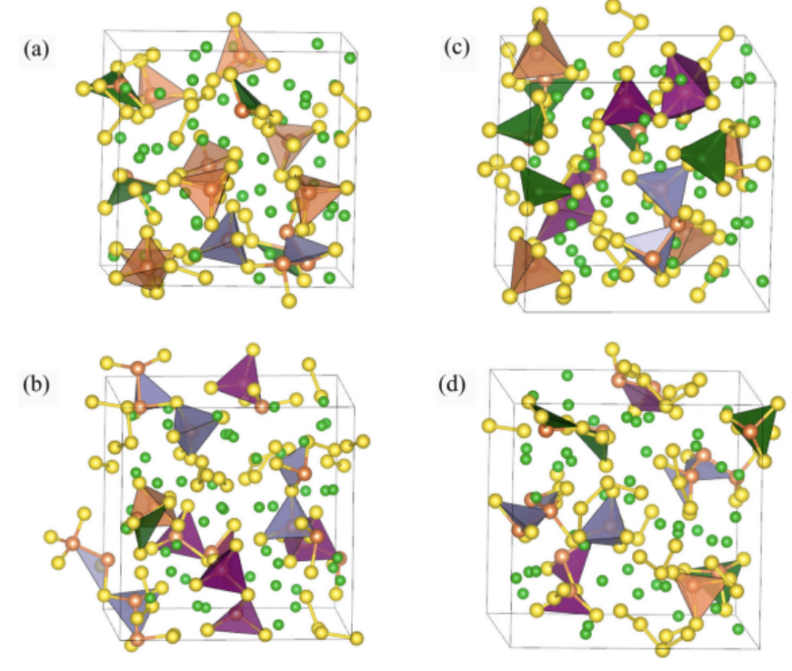
Examine the glass for isolated PS₄ and PS₃ tetrahedral units versus longer chain or polysulfide-based structures. Isolated units are good for ion movement; polysulfides trap Na⁺ ions.
3. Tune for High PS₄ and PS₃ Content
Optimize your process to increase the presence of isolated PS₄ and PS₃ units. These flexible units can rotate, opening paths for fast Na⁺ transport below 500 K.
4. Apply a Smart Heat Treatment
Heat the glass to:
– ~500 K (200–220 °C) if it has high PS₄/PS₃ content
– ~700 K (400–420 °C) if it contains many long-chain units
This reorganizes the internal structure without full crystallization.
5. Measure Na⁺ Diffusivity
Use AIMD simulations or tracer methods to measure Na⁺ mobility. Higher movement = better conductivity. Look for sharp increases near 500 K.
6. Avoid Polysulfides
Polysulfides act as traps. Avoid them during synthesis by adjusting precursor ratios and minimizing exposure to sulfur-rich or humid environments.
7. Create a Glass-Ceramic Hybrid
Transform your optimized glass into a glass-ceramic using controlled crystallization. These hybrids offer high conductivity and mechanical stability, suitable for real-world battery use.